The Significance of the Union Budget
The Union Budget is not just a financial statement; it is the economic vision of the government for the year ahead. Every February, millions of Indians — from farmers to industrialists, students to entrepreneurs — eagerly await the Finance Minister’s speech, as it directly impacts their lives.
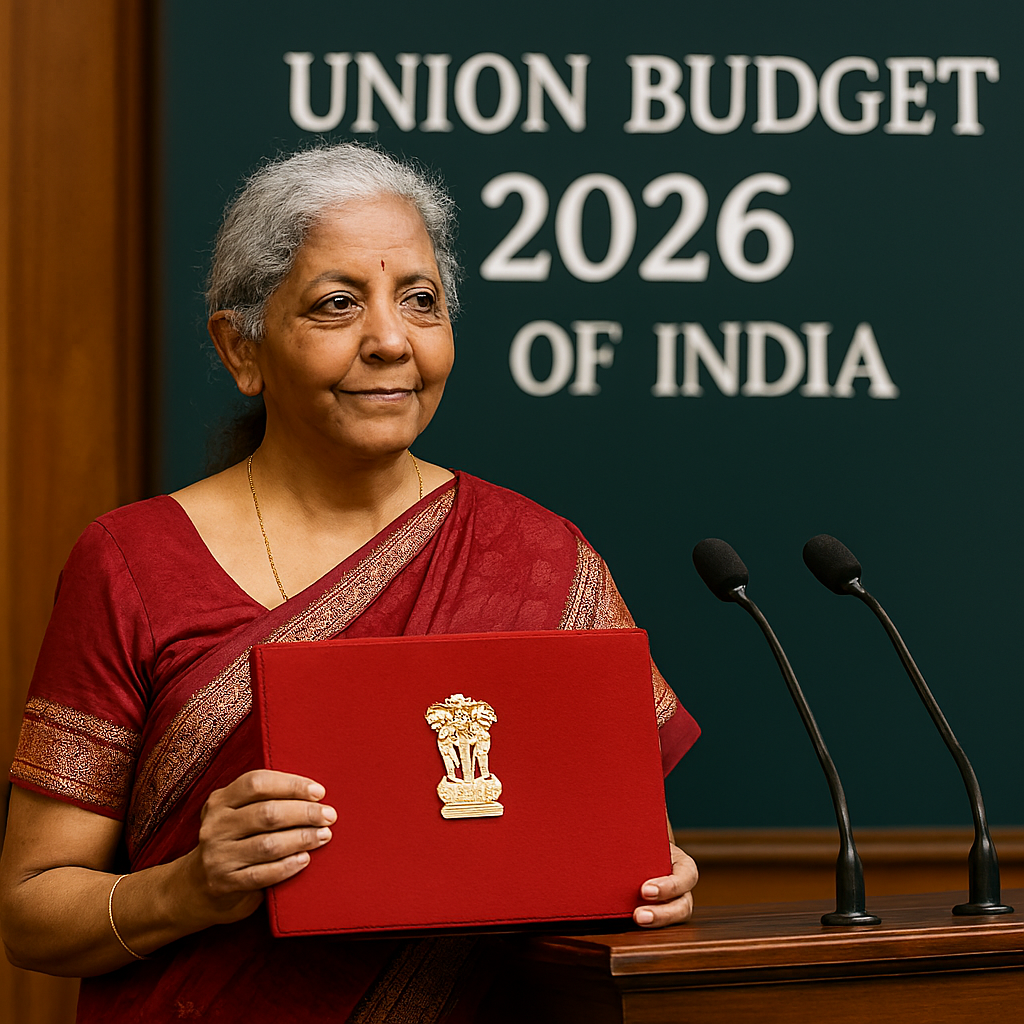
The Union Budget 2026, presented by Finance Minister Nirmala Sitharaman on February 1, 2026, comes at a pivotal moment. India is navigating a complex global environment marked by geopolitical tensions, supply chain disruptions, and climate challenges. At the same time, the country is experiencing robust domestic growth, driven by infrastructure investments, digital innovation, and rising consumer demand.
Context of Budget 2026
India’s economy has shown resilience in recent years. Despite global headwinds, GDP growth has remained strong, inflation has been relatively contained, and exports have expanded in sectors like IT services, pharmaceuticals, and engineering goods.
However, challenges remain:
- Global slowdown affecting demand for Indian exports.
- Energy security concerns due to volatile oil prices.
- Climate change pressures requiring sustainable policies.
- Regional disparities between developed and underdeveloped states.
Against this backdrop, the Union Budget 2026 aims to accelerate growth, strengthen resilience, and ensure inclusion.
Vision of Viksit Bharat 2047
The government has repeatedly emphasized its long-term vision of Viksit Bharat by 2047, coinciding with India’s centenary of independence. The Union Budget 2026 is a crucial step in this journey.
The budget is guided by three Kartavyas (duties):
- Accelerate Growth – Build competitiveness, resilience, and innovation.
- Ensure Inclusion – “Sabka Saath, Sabka Vikas” (Together with all, development for all).
- Empower Communities – Provide resources, opportunities, and social equity.
Themes of Union Budget 2026
The Union Budget 2026 revolves around six major themes:
- Manufacturing & Innovation – Boosting semiconductors, biopharma, electronics, and rare earths.
- Infrastructure Development – Railways, roads, ports, fibre, and smart cities.
- Agriculture & Rural Development – Modernization, irrigation, food security, and sustainable farming.
- MSMEs & Industrial Growth – Champion MSMEs program, legacy industry revival.
- Banking & Financial Sector – Strengthening resilience, digital inclusion, fintech innovation.
- Social & Inclusive Development – Healthcare, education, skill development, women empowerment.
Why Budget 2026 is Historic
Several factors make this budget historic:
- Record capital expenditure of ₹12.2 lakh crore.
- Seven new high-speed rail corridors to revolutionize transport.
- Rare earth corridors to secure critical minerals for future industries.
- Biopharma SHAKTI scheme with ₹10,000 crore allocation.
- Champion MSMEs program to empower small businesses.
This combination of big-ticket infrastructure projects, strategic manufacturing initiatives, and inclusive social policies makes Budget 2026 one of the most ambitious in India’s history.
Major Announcements in Union Budget 2026 :
The Union Finance Budget 2026 is packed with transformative announcements across manufacturing, infrastructure, agriculture, MSMEs, finance, and social development. Each initiative is designed to accelerate India’s journey towards Viksit Bharat 2047. Let’s explore them in detail.
1. Manufacturing & Innovation
India Semiconductor Mission (ISM) 2.0
- Objective: Reduce dependence on imported chips and establish India as a global semiconductor hub.
- Key Features:
- Expanded funding for fabrication plants.
- Incentives for design and R&D.
- Collaboration with global chipmakers.
- Impact:
- Boosts electronics, automotive, and telecom industries.
- Creates high-skilled jobs.
- Strengthens national security by reducing reliance on foreign supply chains.
Biopharma SHAKTI Scheme
- Allocation: ₹10,000 crore.
- Focus: Pharmaceutical innovation, biomanufacturing, and vaccine development.
- Benefits:
- Strengthens India’s position as the “Pharmacy of the World.”
- Encourages biotech startups.
- Enhances healthcare resilience.
Electronics Components Manufacturing Scheme
- Incentives for domestic production of critical components.
- Reduces import bills and supports “Make in India.”
- Encourages SMEs to enter electronics manufacturing.
Rare Earth Corridors
- States Covered: Odisha, Kerala, Andhra Pradesh, Tamil Nadu.
- Purpose: Secure critical minerals like lithium, cobalt, and rare earths.
- Strategic Importance:
- Essential for EV batteries, renewable energy, and defense.
- Reduces dependence on China-dominated supply chains.
Chemical Parks
- Establishment of 3 new hubs.
- Revives chemical industry with modern safety and sustainability standards.
- Supports downstream industries like textiles, plastics, and pharmaceuticals.
2. Infrastructure Development
Capital Expenditure Push
- Target: ₹12.2 lakh crore for FY27.
- Focus Areas: Railways, roads, ports, airports, and renewable energy.
- Impact:
- Multiplier effect on GDP growth.
- Job creation in construction and allied sectors.
- Improved logistics and competitiveness.
Seven High-Speed Rail Corridors
- Expansion beyond Mumbai-Ahmedabad.
- New corridors to connect major metros and industrial hubs.
- Benefits:
- Faster travel, reduced congestion.
- Boost to tourism and business connectivity.
- Symbol of modern India’s infrastructure ambition.
National Fibre Scheme
- Aim: Self-sufficiency in fibre and textiles.
- Support for cotton, jute, and synthetic fibre industries.
- Enhances India’s global competitiveness in textiles.
Urban Infrastructure Push
- Smart city projects with AI-driven traffic management.
- Metro rail expansion in Tier-2 cities.
- Affordable housing schemes for urban poor.
3. Agriculture & Rural Development
- Digital Agriculture Platforms: Farmers can access market prices, weather forecasts, and government schemes.
- Irrigation Projects: Focus on drought-prone regions like Bundelkhand.
- Food Security Schemes: Strengthening PDS and storage infrastructure.
- Organic Farming Support: Incentives for sustainable practices.
- Rural Employment: Expansion of MGNREGA with skill-based projects.
4. MSMEs & Industrial Growth
Champion MSMEs Program
- Provides financial, technical, and marketing support.
- Helps MSMEs scale up and compete globally.
- Encourages digital adoption among small businesses.
Rejuvenation of Legacy Industries
- Modernization of traditional sectors like textiles, leather, and handicrafts.
- Integration with e-commerce platforms for global reach.
- Skill development programs for artisans.
Credit Access
- Simplified loan processes through digital platforms.
- Expansion of credit guarantee schemes.
- Encouragement of fintech solutions for MSMEs.
5. Banking & Financial Sector
- Strengthening Banking Resilience: Measures to reduce NPAs and improve governance.
- Digital Financial Inclusion: Expansion of UPI, digital wallets, and rural banking.
- Fintech Innovation: Support for startups in AI-driven financial services.
- Credit Expansion: Special focus on agriculture and MSMEs.
6. Social & Inclusive Development
- Healthcare: Increased spending on rural hospitals and preventive care.
- Education: Expansion of digital learning platforms and AI-driven skill programs.
- Women Empowerment: Schemes for entrepreneurship and financial independence.
- Youth Employment: Skill development aligned with emerging industries.
- Social Safety Nets: Strengthening pensions, insurance, and welfare schemes.
Sector-Wise Impact of Union Budget 2026 :
The Union Budget 2026 is not just about headline announcements; its true significance lies in how these policies translate into sectoral impact. Let’s break down the effects on agriculture, industry, infrastructure, education, healthcare, and technology.
1. Agriculture & Rural Development
Agriculture remains the backbone of India’s economy, employing nearly half the workforce. The budget’s focus on modernization and sustainability is crucial.
- Irrigation Projects: Special emphasis on drought-prone regions like Bundelkhand and Marathwada.
- Digital Agriculture Platforms: Farmers can access real-time market prices, weather forecasts, and government schemes.
- Food Security: Strengthening the Public Distribution System (PDS) and building modern storage facilities.
- Organic Farming: Incentives for sustainable practices, reducing chemical dependency.
- Rural Employment: Expansion of MGNREGA with skill-based projects to create durable assets.
Impact:
- Higher productivity and resilience against climate shocks.
- Better income security for farmers.
- Integration of rural India into digital and modern supply chains.
2. Industry & MSMEs
MSMEs contribute nearly 30% of India’s GDP and 50% of exports. The budget provides targeted support.
- Champion MSMEs Program: Helps small businesses scale globally.
- Tax Incentives: Lower compliance burden and simplified GST norms.
- Legacy Industry Revival: Modernization of textiles, leather, and handicrafts.
- Credit Access: Digital loan platforms and expanded credit guarantee schemes.
Impact:
- Boosts competitiveness of small businesses.
- Encourages innovation and digital adoption.
- Strengthens India’s export potential.
3. Infrastructure Development
Infrastructure is the engine of growth. The budget’s record capital expenditure will transform connectivity.
- High-Speed Rail Corridors: Seven new projects connecting metros and industrial hubs.
- Smart Cities: AI-driven traffic management, green energy integration.
- Housing Schemes: Affordable housing for urban poor.
- Renewable Energy Projects: Solar, wind, and green hydrogen investments.
Impact:
- Faster travel and logistics efficiency.
- Job creation in construction and allied industries.
- Improved urban living standards.
- Strengthened energy security and sustainability.
4. Education & Skill Development
Education and skills are central to India’s demographic dividend.
- Digital Learning Platforms: Expansion of online education in rural areas.
- AI-Driven Skill Programs: Training youth in emerging technologies.
- Higher Education Funding: Support for research universities.
- Vocational Training: Industry-linked skill centers in Tier-2 cities.
Impact:
- Bridging rural-urban education gaps.
- Preparing workforce for Industry 4.0.
- Enhancing employability of youth.
5. Healthcare
Healthcare spending has been increased with a focus on rural and preventive care.
- Rural Hospitals: Expansion of medical infrastructure in underserved areas.
- Preventive Healthcare: Vaccination drives, awareness campaigns.
- Biopharma SHAKTI Scheme: Boosting innovation in pharmaceuticals.
- Digital Health Records: Integration of patient data for better services.
Impact:
- Improved access to healthcare in rural India.
- Strengthened resilience against pandemics.
- Growth of India’s pharmaceutical industry.
6. Technology & Digital Innovation
Technology is a cross-cutting theme in Budget 2026.
- Semiconductors (ISM 2.0): Reduces dependence on imports.
- Fintech Innovation: Support for AI-driven financial services.
- Digital Financial Inclusion: Expansion of UPI and digital wallets.
- Smart Governance: AI-based monitoring of schemes.
Impact:
- Strengthens India’s position in global tech supply chains.
- Expands financial inclusion.
- Improves efficiency of governance.
Fiscal Position & Economic Analysis :
The Union Budget 2026 is ambitious in scope, but its credibility rests on the government’s ability to balance growth-oriented spending with fiscal discipline. Let’s examine the fiscal position in detail.
1. Fiscal Deficit Target
- The fiscal deficit for FY27 is targeted at 5.1% of GDP.
- This is slightly lower than the previous year’s 5.3%, showing a commitment to gradual consolidation.
- The government aims to bring the deficit below 4.5% by FY29.
Implication:
- A controlled deficit reassures investors and rating agencies.
- It allows room for high capital expenditure without destabilizing macroeconomic stability.
2. Revenue Sources
The government’s revenue is expected to grow strongly, driven by tax buoyancy.
- GST Collections: Expected to cross ₹2 lakh crore per month.
- Direct Taxes: Personal income tax and corporate tax buoyancy due to economic growth.
- Disinvestment: Target of ₹1.2 lakh crore from privatization of PSUs.
- Non-Tax Revenue: Telecom spectrum auctions, dividends from RBI and PSUs.
Implication:
- Strong revenue growth provides fiscal space for ambitious spending.
- Reliance on disinvestment indicates continued push for privatization.
3. Expenditure Priorities
The budget allocates resources strategically across capital and social spending.
- Capital Expenditure: ₹12.2 lakh crore, focused on infrastructure.
- Social Spending: Increased allocations for healthcare, education, and welfare schemes.
- Defense: Modernization of armed forces with focus on indigenous production.
- Green Transition: Renewable energy projects and climate adaptation programs.
Implication:
- Balanced approach ensures both growth and social equity.
- Defense and green energy spending reflect strategic priorities.
4. Debt Sustainability
India’s debt-to-GDP ratio remains around 82%, higher than many emerging economies.
- The government aims to reduce this gradually through fiscal consolidation.
- Strong nominal GDP growth provides cushion.
- Risks include global interest rate volatility and external shocks.
Implication:
- Debt sustainability depends on maintaining growth momentum.
- Fiscal discipline is essential to avoid crowding out private investment.
5. Inflation & Monetary Policy
- Inflation is projected at 4.5%, within RBI’s target band.
- Fiscal measures complement monetary policy by avoiding excessive demand-side pressures.
- Food inflation remains a risk due to climate variability.
6. External Sector
- Current account deficit expected at 2.2% of GDP.
- Export growth supported by manufacturing incentives.
- Import substitution in semiconductors and rare earths reduces vulnerability.
7. Investment Climate
- High capital expenditure signals government commitment to growth.
- Private investment expected to follow public spending.
- Stable fiscal position reassures foreign investors.
State-Wise Benefits of Union Budget 2026 :
One of the most important aspects of the Union Budget is how its policies translate into regional development. India’s diversity means that each state has unique needs and opportunities. Budget 2026 addresses these through targeted infrastructure projects, industrial corridors, and social schemes.
1. Uttar Pradesh
- High-Speed Rail Corridors: UP will benefit from new rail connectivity linking Lucknow, Kanpur, and Varanasi to Delhi and other metros.
- MSME Incentives: Special support for textile and leather industries in Kanpur and Agra.
- Agriculture Modernization: Irrigation projects in Bundelkhand to tackle drought.
- Urban Development: Smart city projects in Lucknow, Kanpur, and Varanasi.
Impact:
- Boosts industrial competitiveness.
- Improves rural resilience.
- Enhances connectivity and tourism.
2. Tamil Nadu
- Rare Earth Corridor: Tamil Nadu is a key beneficiary of the rare earth corridor, supporting EV and renewable energy industries.
- Textile Industry Support: National Fibre Scheme strengthens Tamil Nadu’s textile exports.
- Port Development: Investments in Chennai and Tuticorin ports.
- Skill Development: AI-driven training centers for youth.
Impact:
- Strengthens Tamil Nadu’s role as a manufacturing hub.
- Creates jobs in textiles and renewable energy.
- Enhances export competitiveness.
3. Maharashtra
- Smart Cities: Mumbai, Pune, and Nagpur benefit from urban infrastructure upgrades.
- Industrial Hubs: Support for automotive and electronics industries.
- Housing Schemes: Affordable housing projects in Mumbai metropolitan region.
- Renewable Energy: Solar and wind projects in Vidarbha.
Impact:
- Improves urban living standards.
- Strengthens Maharashtra’s industrial base.
- Promotes sustainable energy.
4. Odisha
- Rare Earth Corridor: Odisha gains strategic importance in critical minerals.
- Infrastructure Projects: Road and port development to support mining exports.
- Agriculture Support: Irrigation schemes in coastal regions.
- Skill Development: Training programs for mining and industrial workers.
Impact:
- Positions Odisha as a key player in rare earth supply chains.
- Boosts employment in mining and allied industries.
5. Kerala
- Rare Earth Corridor: Focus on sustainable mining and processing.
- Healthcare Investments: Expansion of rural hospitals and preventive care.
- Tourism Development: Infrastructure support for eco-tourism.
- Digital Inclusion: Expansion of fintech and digital platforms.
Impact:
- Strengthens Kerala’s healthcare and tourism sectors.
- Creates jobs in mining and services.
6. Andhra Pradesh
- Rare Earth Corridor: Supports EV battery and renewable energy industries.
- Port Development: Investments in Visakhapatnam port.
- Agriculture Modernization: Irrigation projects in Rayalaseema.
- Skill Development: Training centers for youth in IT and manufacturing.
Impact:
- Boosts Andhra Pradesh’s role in global supply chains.
- Enhances agricultural resilience.
7. North-East States
- Connectivity Projects: Roads, railways, and airports to integrate the region.
- Agriculture Support: Focus on organic farming and horticulture.
- Tourism Development: Eco-tourism initiatives in Meghalaya, Assam, and Arunachal Pradesh.
- Digital Inclusion: Expansion of internet connectivity.
Impact:
- Reduces regional disparities.
- Promotes sustainable development.
- Strengthens integration with national economy.
Challenges & Opportunities in Union Budget 2026 :
The Union Budget 2026 is ambitious, but its success depends on overcoming challenges while seizing opportunities. Let’s analyze both sides.
Key Challenges
1. Execution Bottlenecks
- Large-scale projects like semiconductor fabs, high-speed rail corridors, and rare earth corridors require long timelines and complex coordination.
- Past experience shows delays in land acquisition, environmental clearances, and inter-departmental approvals.
- Without efficient execution, ambitious announcements risk becoming stalled projects.
2. Fiscal Discipline
- While the fiscal deficit target is set at 5.1% of GDP, maintaining this balance is difficult with rising capital expenditure.
- Revenue buoyancy depends on sustained GST collections and direct tax growth.
- Any slowdown in economic activity could widen the deficit.
3. Global Volatility
- Geopolitical tensions, supply chain disruptions, and commodity price fluctuations pose risks.
- India’s dependence on global markets for energy and technology inputs makes it vulnerable.
- Export competitiveness could be affected by global recessionary trends.
4. Regional Disparities
- While states like Tamil Nadu, Maharashtra, and Uttar Pradesh benefit significantly, smaller states may feel left out.
- Ensuring equitable distribution of infrastructure and industrial projects is essential for balanced growth.
5. Climate & Sustainability
- Agriculture remains vulnerable to climate shocks.
- Infrastructure projects must balance growth with environmental sustainability.
- Renewable energy adoption needs faster scaling to meet climate commitments.
Opportunities Created by Budget 2026
1. India as a Global Manufacturing Hub
- ISM 2.0 and rare earth corridors position India as a key player in semiconductors and critical minerals.
- Biopharma SHAKTI strengthens India’s pharmaceutical leadership.
- Electronics and chemical parks diversify industrial capacity.
2. Infrastructure-Led Growth
- Record capital expenditure creates a multiplier effect on GDP.
- High-speed rail corridors revolutionize transport and logistics.
- Smart cities improve urban living standards and attract investment.
3. Digital Transformation
- Expansion of fintech, UPI, and digital platforms deepens financial inclusion.
- AI-driven skill development prepares youth for future industries.
- Digital agriculture platforms modernize farming practices.
4. Social Inclusion
- Healthcare and education spending strengthens human capital.
- Women empowerment schemes encourage entrepreneurship.
- Rural employment programs reduce poverty and inequality.
5. Green Transition
- Renewable energy investments reduce dependence on fossil fuels.
- Rare earth corridors support EV and clean energy industries.
- Climate adaptation programs enhance resilience.
Balanced Perspective
The Union Budget 2026 is both ambitious and pragmatic.
- Challenges: Execution delays, fiscal risks, global volatility.
- Opportunities: Manufacturing leadership, infrastructure growth, digital innovation, social inclusion, sustainability.
The key lies in implementation efficiency and policy continuity. If executed well, Budget 2026 can accelerate India’s journey towards Viksit Bharat 2047.
Conclusion :
The Union Budget 2026 is a landmark financial blueprint that reflects India’s ambition to transform into a developed nation by 2047 under the vision of Viksit Bharat. It is both growth-oriented and inclusive, balancing record capital expenditure with social equity measures.
Key Takeaways
- Growth-Oriented:
- ₹12.2 lakh crore capital expenditure sets the stage for infrastructure-led growth.
- High-speed rail corridors, smart cities, and renewable energy projects will modernize India’s economy.
- Innovation-Driven:
- ISM 2.0 strengthens India’s semiconductor ecosystem.
- Biopharma SHAKTI scheme positions India as a leader in pharmaceuticals and biotech.
- Rare earth corridors secure critical minerals for future industries.
- Inclusive Development:
- Agriculture modernization ensures food security and rural resilience.
- MSME support empowers small businesses and artisans.
- Healthcare and education spending strengthen human capital.
- Fiscal Discipline:
- Fiscal deficit target of 5.1% of GDP shows commitment to consolidation.
- Strong revenue buoyancy from GST and direct taxes provides fiscal space.
Long-Term Vision
The Union Budget 2026 is not just about the next fiscal year; it is about laying the foundation for the next two decades. By focusing on manufacturing, infrastructure, digital innovation, and social inclusion, the budget aligns with India’s long-term goals:
- Becoming a global manufacturing hub.
- Ensuring energy security and sustainability.
- Empowering youth and women through skills and opportunities.
- Reducing regional disparities and integrating all states into the growth story.
Final Analysis
The Union Budget 2026 is ambitious, pragmatic, and visionary. Its success will depend on efficient execution, fiscal discipline, and resilience against global volatility. If implemented effectively, it can accelerate India’s journey towards becoming a developed nation by 2047, ensuring prosperity, equity, and sustainability for all citizens.
Frequently Asked Questions (FAQs) on Union Budget 2026 :
1. What is the Union Budget 2026 of India?
The Union Budget 2026 is the annual financial statement presented by Finance Minister Nirmala Sitharaman on February 1, 2026. It outlines the government’s revenue, expenditure, and policy priorities for FY27, focusing on manufacturing, infrastructure, agriculture, MSMEs, and inclusive growth under the vision of Viksit Bharat 2047.
2. What are the key highlights of Union Budget 2026?
- ₹12.2 lakh crore capital expenditure target.
- India Semiconductor Mission (ISM) 2.0 expansion.
- Biopharma SHAKTI scheme with ₹10,000 crore allocation.
- Seven new high-speed rail corridors.
- Rare earth corridors in Odisha, Kerala, Andhra Pradesh, and Tamil Nadu.
- Champion MSMEs program for small businesses.
- Increased healthcare and education spending.
3. What is the fiscal deficit target in Union Budget 2026?
The fiscal deficit target is 5.1% of GDP for FY27, down from 5.3% in FY26. The government aims to reduce it below 4.5% by FY29, balancing growth-oriented spending with fiscal discipline.
4. How does Union Budget 2026 support agriculture?
- Irrigation projects in drought-prone regions.
- Digital platforms for farmers to access markets and weather forecasts.
- Strengthening food security through modern storage facilities.
- Incentives for organic and sustainable farming.
- Expansion of rural employment programs like MGNREGA.
5. What benefits does the budget provide to MSMEs?
- Champion MSMEs program for scaling small businesses.
- Tax incentives and simplified compliance norms.
- Easier access to credit through digital platforms.
- Modernization of traditional industries like textiles and leather.
6. What infrastructure projects were announced in Budget 2026?
- Seven new high-speed rail corridors.
- Smart city initiatives with AI-driven traffic management.
- Metro rail expansion in Tier-2 cities.
- Affordable housing schemes for urban poor.
- Renewable energy projects including solar, wind, and green hydrogen.
7. How does Union Budget 2026 impact the healthcare sector?
- Increased spending on rural hospitals.
- Preventive healthcare programs like vaccination drives.
- Biopharma SHAKTI scheme to boost pharmaceutical innovation.
- Integration of digital health records for better patient care.
8. What is the Biopharma SHAKTI scheme?
The Biopharma SHAKTI scheme is a ₹10,000 crore initiative to strengthen pharmaceutical innovation, biomanufacturing, and vaccine development. It positions India as a global leader in healthcare supply chains.
9. Which states benefit most from Union Budget 2026?
- Uttar Pradesh: Rail corridors, MSME incentives, irrigation projects.
- Tamil Nadu: Rare earth corridor, textile industry support.
- Maharashtra: Smart cities, housing, renewable energy.
- Odisha & Kerala: Rare earth corridor development.
- North-East States: Connectivity, tourism, and organic farming support.
10. How does the budget promote digital innovation?
- Expansion of fintech and UPI platforms.
- AI-driven skill development programs.
- Digital agriculture platforms for farmers.
- Smart governance with AI-based monitoring of schemes.
11. What challenges does Union Budget 2026 face?
- Execution delays in large-scale projects.
- Maintaining fiscal discipline amid high capex.
- Global volatility affecting exports and supply chains.
- Regional disparities in project distribution.
- Climate risks impacting agriculture and infrastructure.
12. What opportunities does Union Budget 2026 create?
- India as a global manufacturing hub in semiconductors and pharma.
- Infrastructure-led growth with multiplier effects on GDP.
- Digital transformation across sectors.
- Social inclusion through healthcare, education, and women empowerment.
- Green transition with renewable energy investments.
13. How does Union Budget 2026 affect the education sector?
- Expansion of digital learning platforms in rural areas.
- AI-driven skill programs for youth.
- Increased funding for higher education and research.
- Vocational training centers linked to industry needs.
14. What is the role of rare earth corridors in Budget 2026?
Rare earth corridors in Odisha, Kerala, Andhra Pradesh, and Tamil Nadu secure critical minerals like lithium and cobalt. These are essential for EV batteries, renewable energy, and defense industries, reducing dependence on imports.
15. What is the overall vision of Union Budget 2026?
The Union Budget 2026 aims to accelerate India’s journey towards Viksit Bharat by 2047. It emphasizes growth, innovation, infrastructure, and inclusion, positioning India as a global economic powerhouse while ensuring social equity and sustainability.